Defining the Synergy: AI and Predictive Modelling Explained
In today's data-driven landscape, understanding the future is no longer a luxury but a strategic imperative. The synergy between Artificial Intelligence (AI) and predictive modelling offers precisely this foresight, driving profound business transformation. As Dr. Amit Kumar Das, an expert in the field and leader at an AI SaaS company, often highlights, this combination moves organizations beyond merely reacting to events towards proactively shaping their destinies.
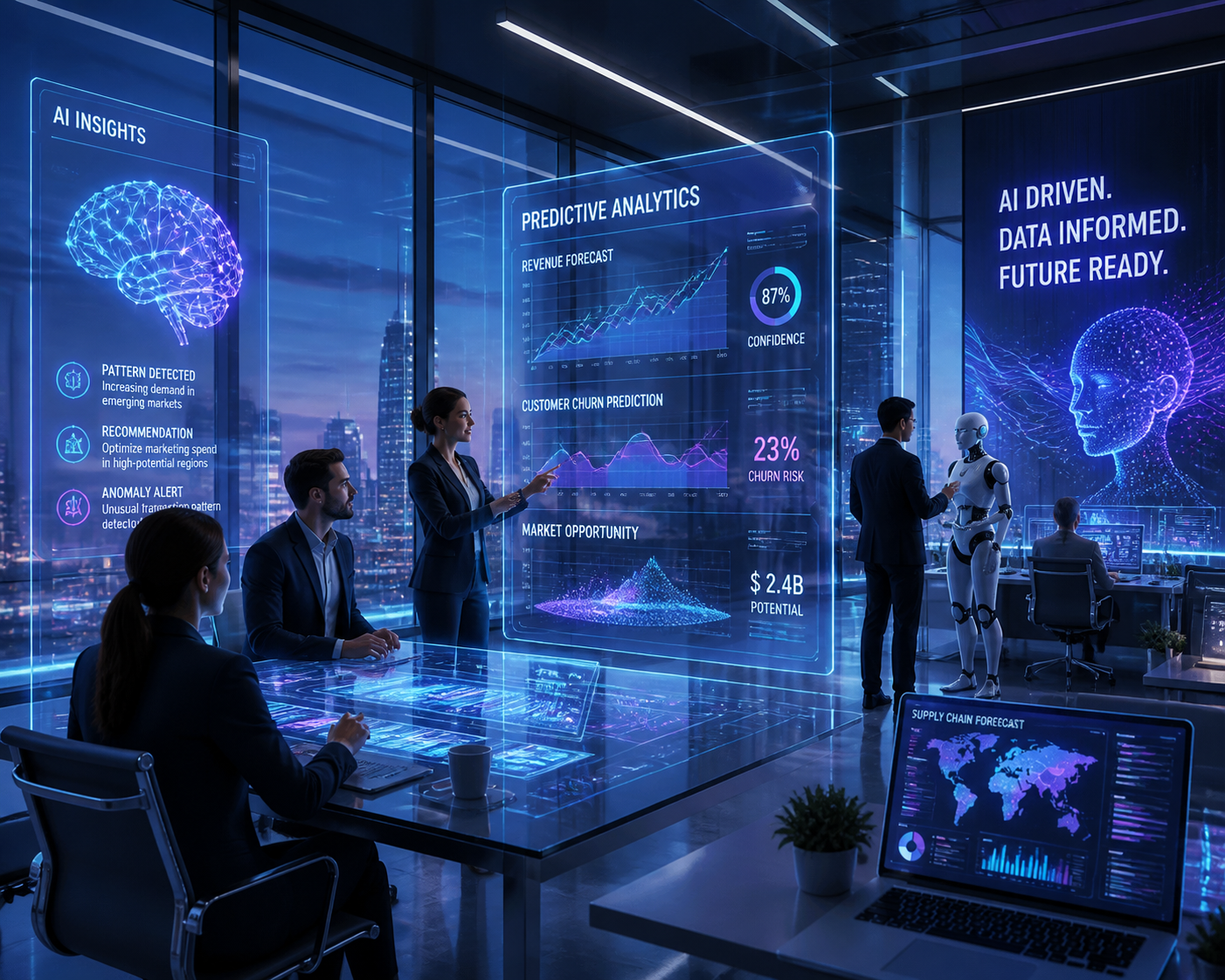
generated from ai models
At its core, predictive AI is a powerful technology that leverages vast quantities of data to anticipate future outcomes, identify causation, and assess risk exposure. Unlike descriptive analytics, which explains past events, predictive AI helps organizations anticipate what is likely to occur. It achieves this by applying sophisticated machine learning algorithms to historical data, examining patterns and trends to make accurate forecasts. For instance, it can predict future trends and anticipate customer behavior, enabling smarter business decisions faster. The accuracy and performance of these predictive AI models are heavily reliant on the quality and quantity of the training data, necessitating rigorous data governance and consistent updates.
Predictive modelling, a foundational component of predictive AI, involves using this historical data to create forecasts and predictions about future events or behaviors, often employing techniques like regression. By analyzing patterns and relationships within large datasets, these models can generate sales forecasts, shape product development strategies, anticipate customer needs for customized offerings, and even mitigate business fraud risks. This capability provides invaluable predictive decision support for critical business functions, particularly for marketing professionals seeking to understand their audience better.
The true power emerges from the synergy between these technologies. AI models learn from patterns in data and continuously improve over time, making predictions more accurate and adaptable. This capability is instrumental in enabling highly effective AI-Assisted Marketing strategies, allowing brands and agencies to tailor campaigns with unprecedented precision. When integrated into a comprehensive Marketing Intelligence Platform, this combined intelligence empowers organizations to move beyond traditional analytics. This dynamic interplay is unlocking new potentials, transforming industries, and creating a more intelligent and data-driven future, ultimately contributing to a holistic Connected Intelligence Ecosystem where foresight drives every strategic move.
Transforming Operations: Enhanced Decision-Making with Predictive Insights
The integration of AI and predictive modeling fundamentally reshapes how businesses operate, transitioning from reactive strategies to proactive foresight. This paradigm shift moves organizations beyond merely reacting to events towards actively anticipating and shaping their future. Through AI-powered analytics, companies gain robust predictive decision support, enabling them to forecast trends, optimize complex operations, and make truly data-driven decisions that foster sustainable growth and competitive advantage.
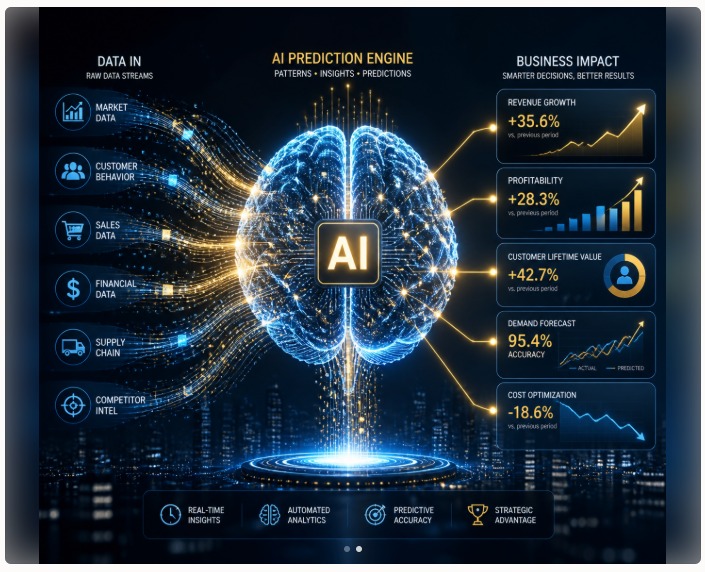
generated from ai models
This enhanced capability significantly boosts operational intelligence across various industries. By improving probability forecasting, AI-powered predictive analytics allows for more strategically informed long-term planning and quicker decision-making, offering a sustainable competitive advantage and driving productivity gains. For marketing professionals, this translates into advanced AI-assisted marketing, where a sophisticated marketing intelligence platform can provide real-time insights, automate reporting, and redefine the business intelligence landscape. This comprehensive approach fosters a connected intelligence ecosystem, where the analysis of big data by AI leads to superior organizational decision-making.
Real-World Impact: Industry Examples of AI-Driven Success
For years, AI was largely perceived as "corporate theatre"—a series of intriguing "what-ifs" that often struggled to deliver tangible results in the real world. However, we've moved past this era, witnessing AI become the literal nervous system of a company, tearing down old data silos and replacing rigid, "if-this-then-that" logic with systems that learn from human behavior on the fly. This profound shift is projected to contribute up to $15.7 trillion to the global economy by 2030, with certain industries accounting for a substantial portion of this value creation.
The impact is far-reaching and measurable. Healthcare, for instance, stands as the industry experiencing the most profound AI-driven transformation in 2026, leading to significant tangible benefits for end users. Beyond healthcare, AI is creating measurable impact across numerous sectors, fundamentally redefining core operations and business models. Organizations are seeing the strongest returns by applying AI to core business processes such as demand and supply planning, customer experience and personalization, financial analysis and forecasting, and risk management and compliance.
For marketing professionals, brands, and agencies, this translates into powerful capabilities. The integration of AI for predictive decision support enables faster, data-driven choices, moving beyond traditional 'if-this-then-that' logic to understand customer needs intuitively. This evolution is particularly evident in AI-assisted marketing, where teams across industries leverage AI to personalize experiences and drive measurable outcomes that impact revenue growth. An effective marketing intelligence platform, powered by AI, transforms raw data into actionable insights, providing the foresight needed to anticipate market shifts and optimize campaigns. This holistic approach fosters an environment of operational intelligence, where every facet of a business benefits from interconnected, data-driven insights. The true value lies in how AI systems learn from human behavior to deliver services that genuinely understand customer needs, rather than cold automation.
Navigating the Hurdles: Challenges in AI Adoption and Ethics
While Artificial Intelligence (AI) and its associated technologies like Generative AI, machine learning, and large language models (LLMs) are undeniably the buzzwords of the decade, promising and delivering revolutionary approaches to work and life, it's crucial to acknowledge that AI is not a magic wand that instantly solves all business problems. For marketing professionals, brands, and agencies eager to harness AI's transformative potential, understanding the inherent challenges is key to successful implementation.
One significant hurdle lies in the multifaceted ethical and organizational challenges that emerge during AI implementation. Ensuring data privacy, mitigating algorithmic bias, and establishing clear accountability are paramount, especially when deploying sophisticated tools for AI-Assisted Marketing. Beyond ethics, organizations often grapple with the complexities of integrating AI systems into existing workflows, requiring significant shifts in operational processes and employee skill sets to fully leverage new capabilities.
Furthermore, financial barriers present a substantial obstacle, particularly for smaller or medium-sized companies. The cost of AI implementation can be considerable, encompassing not just software but also infrastructure, talent acquisition, and ongoing maintenance. This makes the initial investment daunting, even for solutions promising robust Predictive Decision Support and enhanced marketing intelligence.
As an AI SaaS Company, we recognize these complexities. Building a truly effective Marketing Intelligence Platform or a comprehensive Connected Intelligence Ecosystem requires overcoming these adoption challenges. It's about more than just technology; it involves strategic planning, ethical considerations, and a clear understanding of an organization's readiness for Operational Intelligence. Preparing in advance for these hurdles is essential to set the stage for successful AI implementation, ensuring that the promise of AI translates into tangible business transformation rather than unfulfilled potential.
Strategic Blueprint: Implementing AI and Predictive Modelling Successfully
While the allure of AI's transformative power is undeniable, many organizations grapple with the practicalities of implementation. Successfully leveraging AI and predictive modelling for business transformation requires a clear, strategic blueprint. AI is no longer a luxury but a necessity for businesses striving for a competitive edge in today's hyper-competitive and data-rich environment.
A robust implementation roadmap is crucial for turning AI aspirations into tangible results. This involves not just adopting technology but also fostering a culture of data-driven decision-making. The transformative impact of AI-driven predictive analytics on modern decision-making is profound, offering foresight that was once unimaginable. For marketing professionals, this translates into powerful AI-Assisted Marketing capabilities, enabling highly targeted campaigns and optimized resource allocation. A successful blueprint typically involves a structured approach to integrate AI across various business functions, ensuring that the insights generated are actionable.
Developing a strong foundation is key. This includes building a skilled workforce, with Data Science training being essential for maximizing AI adoption and business growth. With the right team and a clear framework in place, businesses can strategically select and deploy AI models that best fit their objectives. This systematic approach facilitates the development of a comprehensive Marketing Intelligence Platform that integrates data from various touchpoints, offering a holistic view of customer behavior and market trends. Ultimately, this leads to enhanced Predictive Decision Support, allowing brands and agencies to anticipate market shifts, personalize customer experiences, and optimize operational efficiency. By following a tested roadmap, organizations can cultivate a Connected Intelligence Ecosystem that drives not just incremental improvements, but fundamental business transformation.
The Road Ahead: Future Trends in AI for Business
Building on the foundational understanding of AI and predictive modelling, the horizon reveals even more transformative shifts for businesses. By 2026, AI is set to evolve from a mere tool to a genuine business partner, with 'Agentic AI' leading this paradigm shift. These aren't just passive tools waiting for commands; rather, they are autonomous agents designed to operate like genuine teammates, fundamentally reshaping how we work.
This evolution, combined with advanced predictive analytics, offers unparalleled Predictive Decision Support, allowing organizations to not only forecast future trends and identify probable risks but also to anticipate outcomes based on historical data. The convergence of diverse data types—text, image, video, audio, and traditional data analysis—into unified multimodal AI systems will revolutionize business intelligence. This creates a robust Marketing Intelligence Platform that empowers marketing professionals, brands, and agencies with comprehensive insights.
Furthermore, the democratization of AI development, accelerated by low-code AI platforms, allows business users to customize embedded AI capabilities without extensive coding expertise. This fosters an environment where integrated AI systems create compound value, forming a truly Connected Intelligence Ecosystem that enhances decision-making across the enterprise. We anticipate these trends will not just optimize existing processes but fundamentally reshape how businesses operate, compete, and deliver value, particularly in areas like AI-Assisted Marketing where smart automation and foresight become critical competitive advantages.